Vietnam Proposes Three Strategic Priorities to Strengthen ASEAN Resilience and Regional Stability
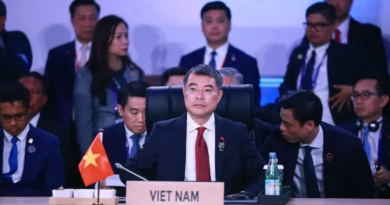
Vietnamese Prime Minister Le Minh Hung outlined three strategic priorities for ASEAN during the retreat session of the 48th ASEAN Summit in Cebu, Philippines, on May 8, 2026. Against the backdrop of escalating geopolitical tensions, particularly the Middle East conflict and its implications for global energy security, his proposals emphasized international law, crisis management, and ASEAN’s strategic autonomy.
First, Vietnam advocated strengthening multilateralism, international law, and strategic trust. Prime Minister Hung called for ASEAN to play a more proactive role in maintaining regional and international peace, security, and freedom of navigation and overflight. Regarding the South China Sea, he emphasized the effective implementation of the Declaration on the Conduct of Parties (DOC) and the early conclusion of a substantive Code of Conduct (COC) consistent with international law, particularly the 1982 United Nations Convention on the Law of the Sea (UNCLOS). Second, Vietnam emphasized proactive crisis prevention and management. Drawing lessons from the Middle East conflict, Prime Minister Hung urged ASEAN to strengthen existing cooperation mechanisms, enhance preventive diplomacy, and improve coordination with external partners. He also highlighted the importance of utilizing dispute settlement mechanisms under the ASEAN Charter and the Treaty of Amity and Cooperation to manage disagreements through dialogue and peaceful means. Third, Vietnam called for greater strategic autonomy and stronger ASEAN centrality amid intensifying major-power competition. Prime Minister Hung stressed that regional solidarity, institutional cohesion, and balanced engagement with external partners were essential to preserving ASEAN’s independence and strengthening its capacity to address multidimensional challenges.
Vietnam’s proposals reflected its commitment to reinforcing ASEAN’s institutional resilience, preserving a rules-based regional order, and promoting collective approaches to security challenges. They also underscored the importance of maintaining ASEAN unity and strategic autonomy in an increasingly uncertain international environment.